
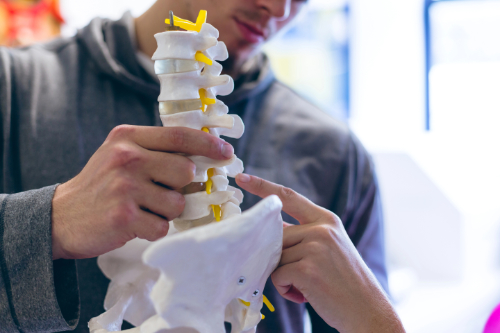
 If you’ve been living with nagging back or neck pain that flares up every time you twist, bend backward, or stand for too long, your facet joints may be the source of the problem. Facet syndrome is one of the most common — and most commonly overlooked — causes of spinal pain, and it affects millions of people of all ages. The encouraging news? At Desoto Upper Cervical in Southaven, MS, Dr. David Hall and Dr. Troy Reistroffer offer a highly effective, drug-free path to lasting relief through specialized upper cervical chiropractic care.
Table of Contents
What Is Facet Syndrome?
Your spine is made up of a series of vertebrae stacked on top of one another. Between each pair of vertebrae, there are small stabilizing joints on either side of the spine called facet joints — also known as zygapophyseal joints. These joints guide and limit how your vertebrae move, allowing you to bend, twist, and extend your back and neck while keeping everything properly aligned.
Facet syndrome occurs when these joints become irritated, inflamed, or degenerated. Like any joint in the body, the facet joints are lined with cartilage and surrounded by a protective capsule filled with lubricating fluid. Over time — or as the result of an injury — that cartilage can wear down, the joint can become inflamed, and the surrounding tissues can tighten in response. The result is pain, stiffness, and reduced range of motion that can significantly impact your quality of life.
Facet syndrome can occur anywhere along the spine, but it’s most commonly seen in the lumbar (lower back) and cervical (neck) regions — two areas that bear the greatest mechanical load and experience the most movement throughout the day.
What Causes Facet Syndrome?
There is rarely a single cause of facet syndrome. More often, it develops as a result of a combination of factors that accumulate over time. Some of the most common contributors include:
Age-related degeneration: As we get older, the cartilage inside our joints naturally begins to break down. The facet joints are no exception. Degenerative changes in the spine — including disc thinning and bone spur formation — can place increased stress on the facet joints, accelerating wear and triggering inflammation.
Poor posture: Chronic postural imbalances, whether from prolonged sitting, forward head posture, or repetitive bending and lifting, place uneven load on the facet joints. Over time, that uneven stress leads to irritation and breakdown.
Trauma and injury: A sudden injury — like a car accident, a sports collision, or a slip and fall — can strain or sprain the facet joints directly. Whiplash, for example, commonly involves facet joint injury in the cervical spine.
Spinal misalignment: When the vertebrae of the spine lose their proper alignment, the facet joints can become compressed or loaded unevenly. This is especially true when a misalignment — or subluxation — occurs in the upper cervical spine, where it can throw off the mechanics of the entire spinal column. Identifying and correcting these subluxations is the heart of what we do at Desoto Upper Cervical.
Repetitive stress: Occupations and activities that involve repetitive spinal loading — heavy lifting, prolonged sitting, or high-impact athletic training — can contribute to facet joint irritation over time.
Recognizing the Symptoms of Facet Syndrome
Facet syndrome has a fairly recognizable symptom pattern, though it can sometimes mimic other spinal conditions. Common signs include:
Localized pain over the affected joint, typically on one or both sides of the spine. In the lower back, this pain often sits just to the side of the midline. In the neck, it may present as stiffness or aching that radiates into the shoulders.
Pain that worsens with extension or rotation. Leaning backward, twisting to one side, or standing for extended periods often aggravates facet syndrome. Many people find temporary relief by sitting or leaning forward.
Morning stiffness that gradually improves with gentle movement throughout the day.
Referred pain that travels into the buttocks, thighs, or — in the case of cervical facet syndrome — into the shoulders, upper back, or base of the skull. This referred pain typically does not follow the sharp, shooting pattern associated with nerve compression from a herniated disc.
Muscle guarding and spasm in the muscles surrounding the affected joint as the body attempts to protect the irritated area.
If any of these symptoms sound familiar, it’s important not to simply push through the pain or rely on over-the-counter medications as a long-term solution. Getting to the root cause is what leads to real, lasting relief.
How Desoto Upper Cervical Addresses Facet Syndrome
At Desoto Upper Cervical, Dr. Hall and Dr. Reistroffer take a root-cause approach to facet syndrome that goes beyond symptom management. Because upper cervical misalignments can disrupt the mechanics of the entire spine — putting added stress on the facet joints from top to bottom — correcting those misalignments is often a critical first step toward lasting recovery.
Precision Upper Cervical Assessment
Before any care begins, Dr. Hall and Dr. Reistroffer conduct a thorough evaluation of your spine, including a detailed health history, postural analysis, range-of-motion testing, and orthopedic and neurological assessment. Advanced imaging may be used to identify exactly where subluxations exist in the upper cervical spine and how they may be contributing to your facet syndrome.
Atlas Orthogonal and Orthospinology Adjustments
Dr. Hall and Dr. Reistroffer use two highly precise upper cervical techniques — Atlas Orthogonal and Orthospinology — to gently correct misalignments at the top of the spine without twisting, cracking, or forceful manipulation. These techniques use careful measurements and gentle, targeted corrections to restore proper alignment to the atlas (C1) and axis (C2) vertebrae. When the upper cervical spine is properly aligned, the rest of the spinal column can rebalance — reducing the uneven mechanical load that drives facet joint irritation and degeneration.
Soft Tissue Relief
The muscles surrounding an irritated facet joint often become tight and guarded over time. Addressing this soft tissue tension is an important part of the recovery process, helping to relax overworked muscles and improve circulation to the affected area.
Rehabilitative Guidance and Postural Correction
Long-term relief from facet syndrome requires more than just in-office care. Dr. Hall and Dr. Reistroffer will guide you through specific therapeutic strategies designed to strengthen the stabilizing muscles of the spine, improve flexibility, and correct the postural patterns that may have contributed to the problem in the first place.
Lifestyle and Ergonomic Recommendations
How you move, sit, lift, and sleep all affect the load placed on your facet joints. Our doctors provide practical, personalized recommendations to reduce unnecessary strain throughout your daily life — whether that means adjusting your workstation, modifying your exercise routine, or improving your sleeping position.
Why Upper Cervical Care Is Different
Many people with facet syndrome are initially told to manage their pain with anti-inflammatory medications, steroid injections, or — in more advanced cases — surgery. While these options may play a role in certain situations, they come with significant limitations and potential risks. Upper cervical chiropractic care, by contrast, is non-invasive, drug-free, and focused on restoring proper function from the top of the spine down — not just masking symptoms.
At Desoto Upper Cervical, we believe that when the foundation of the spine is properly aligned, the body has a much greater ability to heal and maintain itself. That’s why patients dealing with facet syndrome — and many other spinal conditions — often experience meaningful, lasting improvement through upper cervical care.
Ready to Find Relief? We’re Here to Help.
Facet syndrome doesn’t have to be something you simply learn to live with. With the right care, most people experience significant improvement — and many achieve full resolution of their symptoms. If you’re dealing with persistent back or neck pain, stiffness, or limited range of motion, Dr. Hall and Dr. Reistroffer are ready to help you get to the bottom of it and build a clear plan for recovery.
Call Desoto Upper Cervical today at (662) 393-4848 to schedule your consultation. We’re located at 1134 Church Rd W, Southaven, MS 38671. Whether you’ve been struggling for years or are dealing with a more recent flare-up, we’re here to help you move better, feel better, and get back to the life you enjoy — naturally and without drugs.
Frequently Asked Questions About Facet Syndrome
What does facet syndrome feel like?
Facet syndrome typically presents as a dull, aching pain near the spine — usually just to one or both sides of the midline in the lower back or neck. The pain often worsens when leaning backward, twisting, or standing for extended periods. Some people also experience referred pain into the buttocks, thighs, or shoulders, along with morning stiffness that eases with gentle movement.
Is facet syndrome the same as arthritis?
They’re related but not identical. Facet syndrome refers specifically to pain and dysfunction arising from the facet joints of the spine. When that dysfunction is driven by cartilage breakdown and degenerative joint changes, it’s often referred to as facet joint osteoarthritis. So facet arthritis is one form of facet syndrome, but not all facet syndrome involves arthritis — it can also result from acute injury, postural stress, or spinal misalignment.
Can upper cervical chiropractic care help with facet syndrome?
Yes — and often in ways that go beyond what general chiropractic can offer. A misalignment at the top of the spine (the atlas or axis) can alter the mechanics of the entire spinal column, placing added stress on the facet joints below. By correcting that foundational misalignment using Atlas Orthogonal and Orthospinology techniques, Dr. Hall and Dr. Reistroffer at Desoto Upper Cervical help restore balance to the spine as a whole — reducing the mechanical stress that drives facet joint irritation and degeneration.
How long does it take to recover from facet syndrome?
Recovery timelines vary depending on the severity of joint degeneration, how long the condition has been present, and individual health factors. Some patients notice meaningful improvement within a few weeks of beginning upper cervical care. Others with more advanced degeneration may require a longer course of care focused on pain management, functional improvement, and long-term spinal health maintenance.
What makes facet syndrome worse?
Activities and positions that involve spinal extension (leaning backward) or rotation tend to aggravate facet syndrome. Prolonged standing, heavy lifting with poor mechanics, and sitting in unsupported positions can also contribute to flare-ups. Stress, dehydration, and poor sleep can amplify pain sensitivity as well. Dr. Hall and Dr. Reistroffer can help identify your specific aggravating factors and provide strategies to minimize them.
Is facet syndrome a serious condition?
Facet syndrome is generally not considered dangerous, but it can significantly affect quality of life if left unaddressed. Without proper care, ongoing joint irritation and muscle guarding can lead to progressive degeneration and increasing functional limitations. The good news is that early, consistent upper cervical care can slow or halt that progression and keep you active and comfortable.
Can facet syndrome cause leg pain?
Yes, in some cases. While facet syndrome does not typically cause the sharp, shooting nerve pain associated with a herniated disc, it can produce referred pain that travels into the buttocks and upper thighs. If you’re experiencing pain radiating down the leg, it’s important to have a thorough evaluation to determine whether the source is facet-related or involves another structure such as a disc or nerve. The team at Desoto Upper Cervical can help identify the true source of your pain and develop a care plan tailored to your needs.
