
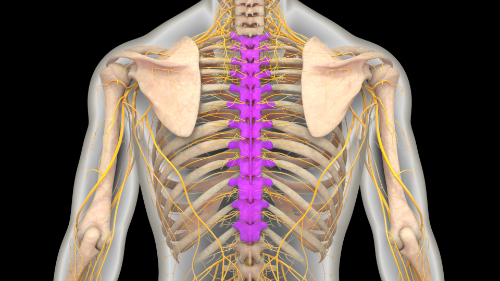
 If you’ve ever experienced that nagging ache between your shoulder blades or a sharp pain in your mid-back that makes it difficult to take deep breaths, you know how frustrating and limiting this type of discomfort can be. What many people don’t realize is that pain in your thoracic spine – the middle portion of your back – is often connected to problems in your upper cervical spine. At Desoto Upper Cervical in Southaven, MS, Dr. David Hall and Dr. Troy Reistroffer have helped countless patients discover that addressing upper cervical misalignments can provide surprising relief from mid-back pain that seemed unrelated to their neck.
Understanding the connection between your upper cervical spine and the rest of your body, including your mid-back, can open up new possibilities for natural, effective treatment of thoracic pain that may have been puzzling you for months or even years.
Table of Contents
The Upper Cervical Connection to Mid-Back Pain
You might be wondering how your neck could possibly affect pain in your mid-back. Let me explain something that most people don’t understand about spinal mechanics: your spine functions as an integrated unit, and problems at the very top can create compensatory issues throughout the entire chain.
Your upper cervical spine – specifically the atlas (C1) and axis (C2) vertebrae at the very top of your neck – serves as the foundation for your entire spinal alignment. When these vertebrae become misaligned, they don’t just cause problems locally in your neck. They force the rest of your spine to adapt and compensate, which can create stress and dysfunction in areas far from the original problem.
Dr. Hall and Dr. Reistroffer often see patients whose mid-back pain actually originates from upper cervical misalignments. Here’s how this works: when your atlas or axis vertebrae are out of position, your head doesn’t sit properly on your neck. To maintain level vision and balance, your body compensates by adjusting the positioning of vertebrae throughout your spine, including in the thoracic (mid-back) region.
These compensatory changes can create abnormal stress on the joints, muscles, and ligaments in your mid-back, leading to pain, stiffness, and dysfunction. What’s particularly frustrating for patients is that traditional treatments focused only on the painful area often provide only temporary relief because they don’t address the underlying upper cervical cause.
How Upper Cervical Misalignments Create Mid-Back Problems
Understanding the specific mechanisms by which upper cervical problems create mid-back pain helps explain why upper cervical care can be so effective for thoracic spine issues.
When your atlas vertebra is misaligned, it affects your head posture, which influences the positioning of every vertebra below it. Your thoracic spine may develop abnormal curves or rotation patterns as it tries to compensate for the altered head position. These compensations place stress on the facet joints, muscles, and ligaments in your mid-back.
Upper cervical misalignments can also affect nerve function throughout your spine. The nervous system pathways that originate in your upper cervical area influence muscle tension and coordination patterns throughout your entire back. When these pathways aren’t functioning optimally, it can lead to abnormal muscle tension patterns that create pain and dysfunction in your mid-back.
Additionally, upper cervical problems can affect your overall posture. When your head doesn’t sit properly on your neck, it often leads to forward head posture, rounded shoulders, and increased kyphosis (forward rounding) of your thoracic spine. This postural distortion places enormous stress on your mid-back structures.
The rib cage, which attaches to your thoracic vertebrae, can also be affected by upper cervical dysfunction. When your spine’s alignment is altered due to upper cervical problems, it can change how your ribs move and function, potentially creating pain that radiates around your chest or feels like muscle strain in your mid-back.
Common Mid-Back Pain Patterns Related to Upper Cervical Dysfunction
At Desoto Upper Cervical, Dr. Hall and Dr. Reistroffer have observed specific patterns of mid-back pain that often respond well to upper cervical treatment. Understanding these patterns can help you recognize whether your thoracic pain might be related to upper cervical dysfunction.
One common pattern is persistent aching between the shoulder blades that seems worse with prolonged sitting or computer work. This type of pain often results from the postural compensations that develop when your upper cervical spine is misaligned. The muscles between your shoulder blades work overtime trying to maintain proper positioning, leading to fatigue and pain.
Another pattern is sharp, stabbing pain that occurs with specific movements like reaching overhead or twisting your torso. This often indicates that the compensatory changes in your thoracic spine have created joint restrictions or abnormal movement patterns that become painful when stressed.
Some patients experience a burning sensation or muscle spasms in their mid-back that seem to come and go without clear triggers. This type of pain often relates to the nerve dysfunction that can occur when upper cervical misalignments interfere with normal nervous system communication to the mid-back region.
Rib pain or pain that wraps around from your back toward your chest is another pattern that frequently improves with upper cervical care. When spinal alignment is restored, it often corrects the rib positioning and movement patterns that were creating this type of discomfort.
The Upper Cervical Advantage: Precision Treatment for Complex Problems
What makes upper cervical care particularly effective for mid-back pain is the precision of the Atlas Orthogonal and Orthospinology techniques that Dr. Hall and Dr. Reistroffer use. These methods can identify and correct the specific upper cervical misalignments that are creating compensatory problems throughout your spine.
Atlas Orthogonal uses precise measurements and very gentle corrections to restore proper alignment to your atlas vertebra. When this critical vertebra is positioned correctly, it often allows the rest of your spine, including your thoracic region, to return to more normal positioning and function naturally.
Orthospinology takes this precision even further by using detailed X-ray analysis to determine exactly how your upper cervical vertebrae are misaligned. This information allows Dr. Hall and Dr. Reistroffer to deliver corrections that are tailored specifically to your individual misalignment pattern.
What many patients find remarkable is how gentle these corrections are. Unlike forceful manipulations that might stress already painful mid-back structures, upper cervical techniques use very light force applied only where it’s needed most. This precision allows for effective treatment without creating additional stress or discomfort in your already painful thoracic area.
The beauty of this approach is that by correcting the primary problem at the top of your spine, it often allows secondary problems throughout your spine to resolve naturally without requiring direct treatment of every painful area.
What Patients Experience with Upper Cervical Treatment for Mid-Back Pain
Many patients are surprised by how upper cervical treatment can affect their mid-back pain. Let me share some of the common experiences that patients at Desoto Upper Cervical report when receiving upper cervical care for thoracic spine issues.
Often, patients notice that their mid-back pain begins to improve even though the treatment is focused on their neck. This can happen relatively quickly – sometimes within the first few treatments – as proper upper cervical alignment allows compensatory patterns throughout the spine to begin normalizing.
Many patients find that their posture improves naturally without conscious effort. When your upper cervical spine is properly aligned, it becomes much easier to maintain good posture throughout your spine, which reduces stress on your mid-back structures.
Breathing often becomes easier and deeper. This makes sense because proper spinal alignment allows your rib cage to move more normally, improving respiratory mechanics. Many patients don’t realize how much their mid-back pain was affecting their breathing until it improves.
Sleep quality frequently improves as mid-back pain decreases. When you’re not dealing with constant aching or sharp pains in your thoracic spine, you can find comfortable sleeping positions more easily and sleep more deeply.
Energy levels often increase as the body doesn’t have to work as hard to maintain compensation patterns and deal with chronic pain. Many patients report feeling less fatigued and more capable of engaging in activities they enjoy.
The Comprehensive Benefits of Addressing Root Causes
What sets upper cervical care apart in treating mid-back pain is its focus on addressing root causes rather than just managing symptoms. When upper cervical misalignments are corrected, patients often experience improvements that extend beyond just their thoracic pain.
Headaches frequently improve along with mid-back pain, which makes sense when you understand that both problems can stem from the same upper cervical dysfunction. Neck stiffness and shoulder tension often resolve as well, since these areas are closely connected to both upper cervical function and thoracic spine health.
Overall spinal health tends to improve when the foundation – the upper cervical spine – is functioning properly. This can help prevent future episodes of mid-back pain and may even help prevent the development of problems in other areas of the spine.
Many patients also notice improvements in their ability to handle stress, both physical and emotional. When your nervous system is functioning optimally due to proper upper cervical alignment, your body is better equipped to adapt to various stressors without developing pain patterns.
Understanding What Upper Cervical Care Can and Cannot Do
While upper cervical care can be remarkably effective for many types of mid-back pain, it’s important to have realistic expectations about what this approach can accomplish.
Upper cervical care is particularly effective when mid-back pain is related to spinal compensation patterns, postural dysfunction, or nerve interference stemming from upper cervical misalignments. These types of problems often respond very well to upper cervical correction.
However, if your mid-back pain is due to serious structural damage, fractures, tumors, or certain systemic diseases, upper cervical care alone may not be sufficient. Dr. Hall and Dr. Reistroffer will conduct thorough evaluations to determine whether upper cervical care is appropriate for your specific condition.
What upper cervical care does exceptionally well is optimize your nervous system function and spinal alignment, which gives your body the best possible foundation for healing and normal function. Even in cases where other treatments may be necessary, having proper upper cervical alignment often enhances the effectiveness of those treatments.
When to Consider Upper Cervical Care for Mid-Back Pain
Upper cervical care may be particularly beneficial if your mid-back pain has certain characteristics or if you’ve had certain experiences with traditional treatments.
If your mid-back pain seems to be related to poor posture, computer work, or activities that stress your neck and upper spine, there’s a good chance that upper cervical dysfunction is contributing to your problem. Similarly, if your mid-back pain developed following a head or neck injury, upper cervical evaluation is definitely warranted.
If you’ve received treatment for your mid-back pain that provided only temporary relief, or if the pain keeps returning despite treatment, it may indicate that the root cause hasn’t been addressed. Upper cervical care focuses on correcting underlying problems rather than just treating symptoms.
Patients who have mid-back pain along with headaches, neck stiffness, or other symptoms that might indicate upper cervical dysfunction often find that addressing their upper cervical alignment helps with all of these problems simultaneously.
Taking a Comprehensive Approach to Spinal Health
At Desoto Upper Cervical, Dr. Hall and Dr. Reistroffer understand that true spinal health requires looking at the entire system, not just isolated painful areas. Their approach to mid-back pain reflects this understanding by focusing on the upper cervical foundation that influences your entire spine.
The precision of their Atlas Orthogonal and Orthospinology techniques allows them to identify and correct specific misalignments that might be contributing to your mid-back pain, even when the connection isn’t immediately obvious.
This comprehensive approach often leads to more lasting results because it addresses underlying causes rather than just treating symptoms. When your upper cervical spine is functioning properly, it creates the optimal conditions for your entire spine to function normally and heal naturally.
Struggling with persistent mid-back pain that hasn’t responded well to other treatments? Call Desoto Upper Cervical today at (662) 393-4848 to schedule a comprehensive upper cervical evaluation with Dr. Hall or Dr. Reistroffer. Using their advanced Atlas Orthogonal and Orthospinology techniques, they can determine if upper cervical misalignments are contributing to your thoracic spine pain and develop a personalized treatment plan to address the root cause of your discomfort. Located at 1134 Church Rd W, Southaven, MS, 38671, we’re here to help you discover how proper upper cervical alignment might be the key to finally resolving your mid-back pain naturally. Don’t let thoracic pain continue to limit your activities and quality of life – discover the upper cervical difference today.
Frequently Asked Questions About Upper Cervical Care and Mid-Back Pain
How can problems in my neck cause pain in my mid-back?
Your spine functions as an integrated unit, with your upper cervical spine serving as the foundation. When the atlas and axis vertebrae are misaligned, it forces the rest of your spine to compensate, creating abnormal stress patterns that can cause pain in your mid-back. Additionally, upper cervical misalignments can affect nerve function and postural patterns that influence your entire thoracic spine.
Why hasn’t anyone told me about this connection before?
Most healthcare providers focus on treating the area where you feel pain rather than looking for underlying causes elsewhere in the spine. Upper cervical specialists like Dr. Hall and Dr. Reistroffer have specific training in understanding how the upper cervical spine affects the entire body, including areas that might seem unrelated like the mid-back.
Will treating my neck help my mid-back pain if I’ve had the pain for years?
Even chronic mid-back pain can often improve with upper cervical care if it’s related to compensation patterns or nerve dysfunction stemming from upper cervical misalignments. While chronic conditions may take longer to respond than acute problems, many patients with long-standing mid-back pain experience significant improvement once their upper cervical alignment is corrected.
How is upper cervical care different from regular chiropractic treatment for mid-back pain?
Upper cervical care focuses specifically on the atlas and axis vertebrae, using extremely precise techniques to correct misalignments in this critical area. Instead of treating the painful mid-back area directly, this approach addresses the underlying cause at the foundation of your spine. The Atlas Orthogonal and Orthospinology techniques are much more precise and gentle than traditional spinal manipulation.
What if my mid-back pain is caused by poor posture from computer work?
Poor posture often develops as a compensation for underlying upper cervical dysfunction. When your upper cervical spine is properly aligned, it becomes much easier to maintain good posture naturally. Many patients find that their posture improves automatically after their upper cervical alignment is corrected, which helps resolve their mid-back pain.
Can upper cervical care help with the breathing difficulties I have with my mid-back pain?
Yes! Proper spinal alignment allows your rib cage to move more normally, which improves respiratory mechanics. Many patients with mid-back pain don’t realize how much their spinal dysfunction is affecting their breathing until it improves with upper cervical treatment.
How long does it take to see improvement in mid-back pain with upper cervical care?
Many patients notice some improvement in their mid-back pain within the first few upper cervical treatments as compensatory patterns begin to normalize. However, lasting improvement typically requires several weeks to months of consistent care, depending on how long the problem has been present and the severity of the underlying dysfunction.
Will I need X-rays to determine if upper cervical problems are causing my mid-back pain?
Yes, precise X-rays are essential for upper cervical care because they allow Dr. Hall and Dr. Reistroffer to see exactly how your atlas and axis vertebrae are misaligned. This information is crucial for delivering the specific corrections needed to address your individual misalignment pattern and its effects throughout your spine.
Can upper cervical care help with the muscle spasms I get in my mid-back?
Absolutely! Muscle spasms in the mid-back often result from abnormal nerve signals or compensation patterns related to upper cervical dysfunction. When upper cervical alignment is corrected, it often restores normal nerve function and reduces the abnormal muscle tension that causes spasms.
What should I expect during my evaluation for mid-back pain at Desoto Upper Cervical?
Dr. Hall or Dr. Reistroffer will take a detailed history of your mid-back pain and any other symptoms you’re experiencing. They’ll perform a comprehensive upper cervical examination and take precise X-rays to analyze your alignment. They’ll then explain how upper cervical misalignments might be contributing to your mid-back pain and develop a personalized treatment plan to address the root cause of your problem.
